GENXFINITY MAGAZINE
Stories for the generation that still has more to give.

What We Miss When We Stop Watching Together
I remember watching the Emmys with my mother, my aunt and my grandmother. Back then, Hollywood seemed to fill the entire theater—and television could fill the entire living room. Streaming gave us more choices than we ever imagined. But somewhere along the way, did we lose the experience of watching together?
The Emmys bring back a living room full of family. What can we carry from that experience into the way we watch today?
By Christine Silva
I can still see it. Not every winner. Not every dress. Not every acceptance speech.
What I remember is the room.
I remember watching the Emmy Awards in the late 1970s and throughout the 1980s with my mother, my aunt and my grandmother. Four women from different generations, sitting together watching television.
When the cameras swept across the theater, Hollywood looked enormous. There seemed to be people everywhere—floor after floor of men in tuxedos and women in gowns. The balconies were part of the spectacle. To me, the audience itself made the occasion feel important.
For years I wondered whether childhood had simply made everything look bigger. Then I looked into the building.
The theater really did have those levels
The Television Academy lists Pasadena Civic Auditorium as the Primetime Emmy venue from 1977 through 1997. The Academy's venue history puts those memories in a setting.
Pasadena Civic’s current technical specifications describe a main floor, loge and upper balcony. The levels I remember were real. The specifications cannot tell us which seats were occupied on a particular Emmy night.
The building explains the picture in my head. The people beside me explain why it stayed there.
Television gave our household a meeting place
The Census Bureau's historical account reports that 9 percent of American households had a television in 1950; by 1965, the figure was 93 percent. Its history of television adoption records how quickly ownership spread.
In our living room, I remember the anticipation, the conversation and the sense that we were sitting down for something together.
I did not experience those evenings as a limitation on choice. I experienced them as family time. Looking back, that is the part I want to hold onto.
The Emmys still bring people together
People still watch together. CBS reported more than 7.42 million viewers for the 2025 Emmy Awards on CBS and Paramount+, its largest television audience since 2021. That is a 2025 result, not a figure for this year’s ceremony. Read CBS’s September 15, 2025 announcement and ratings methodology.
My concern is more personal than a ratings contest: how often do we make room for an experience that belongs to more than one person?
More places to watch, more ways to gather
Nielsen's July 2026 Gauge report put streaming at 49.0 percent of total television viewing, broadcast at 19.5 percent and cable at 18.7 percent. YouTube accounted for 14.2 percent. The reporting interval ran from June 29 through July 26, 2026. These are shares of television viewing, not of every kind of media use on every device. Nielsen's report supplies the figures and measurement notes.
To me, that mix raises a question about attention. The cultural center I remember from childhood no longer feels like a single place.
Deloitte's 2026 Digital Media Trends report adds another perspective. In its survey, 32 percent of consumers said social-media content felt more relevant to them than traditional media, and 33 percent reported a stronger personal connection to social-media creators than to television personalities or actors. The online survey covered 3,575 U.S. consumers in October and November 2025 and was weighted to Census data. The report and methodology describe reported preferences, not a measurement of family closeness.
I do not read those findings as a reason to dismiss a younger person's favorite creator. I read them as a reason to ask what that person finds worth watching. We might discover a point of connection by being curious about each other's choices.
The building can be larger while the evening feels smaller
Peacock Theater lists 7,100 seats, while noting that capacity varies with an event's setup. That is more than Pasadena Civic's listed capacity. Peacock Theater's seating guide makes the comparison possible; neither venue's capacity establishes an actual Emmy attendance count.
Knowing that challenges my own memory in an interesting way. When I say Hollywood looked bigger then, I am describing a feeling. I am not measuring seats or claiming that childhood television was objectively better.
When I watched with my mother, my aunt and my grandmother, none of us thought we were creating a memory. We were just watching television. Decades later, I understand how much of the experience was the company beside me.
Bring the best of that experience forward
That is why I believe this conversation belongs on GenXFinity. If your memories include getting up to change the channel, looking through TV Guide or waiting for the next episode, you have a starting point for this conversation. If your memories began with a different screen, you belong in it too.
Picture a household in which one person is watching a series, another a creator's video and another playing a game. There need not be anything wrong with those choices. I would simply like us to make a little space for a shared choice as well.
I am not interested in pretending everything was better in the past. I want to carry forward something I valued: making an occasion of being together.
Try one shared plan this week: ask someone to pick a movie, an episode, or a video they want to show you, and agree on a time to watch it together. Take turns choosing. Leave room for the possibility that their enthusiasm will surprise you.
We do not need to recreate my childhood living room to try that. We can make a new memory with the people available to us now.
When I think about those Emmy nights, I do not remember who won. I remember who was sitting beside me.
About this article
Personal reflection and cultural commentary by Christine Silva, with sources linked throughout.
When Home Becomes a Holding Pattern
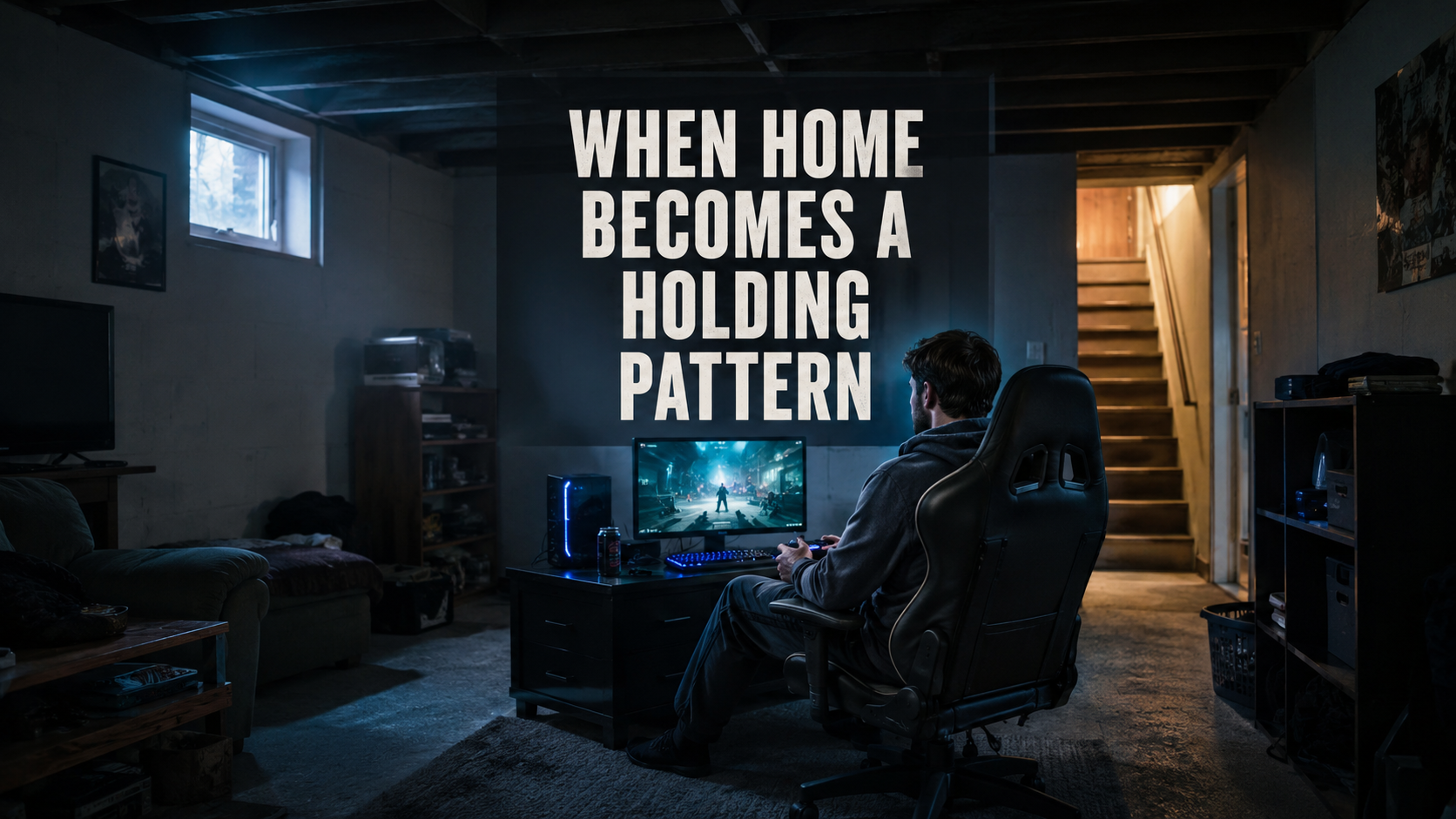
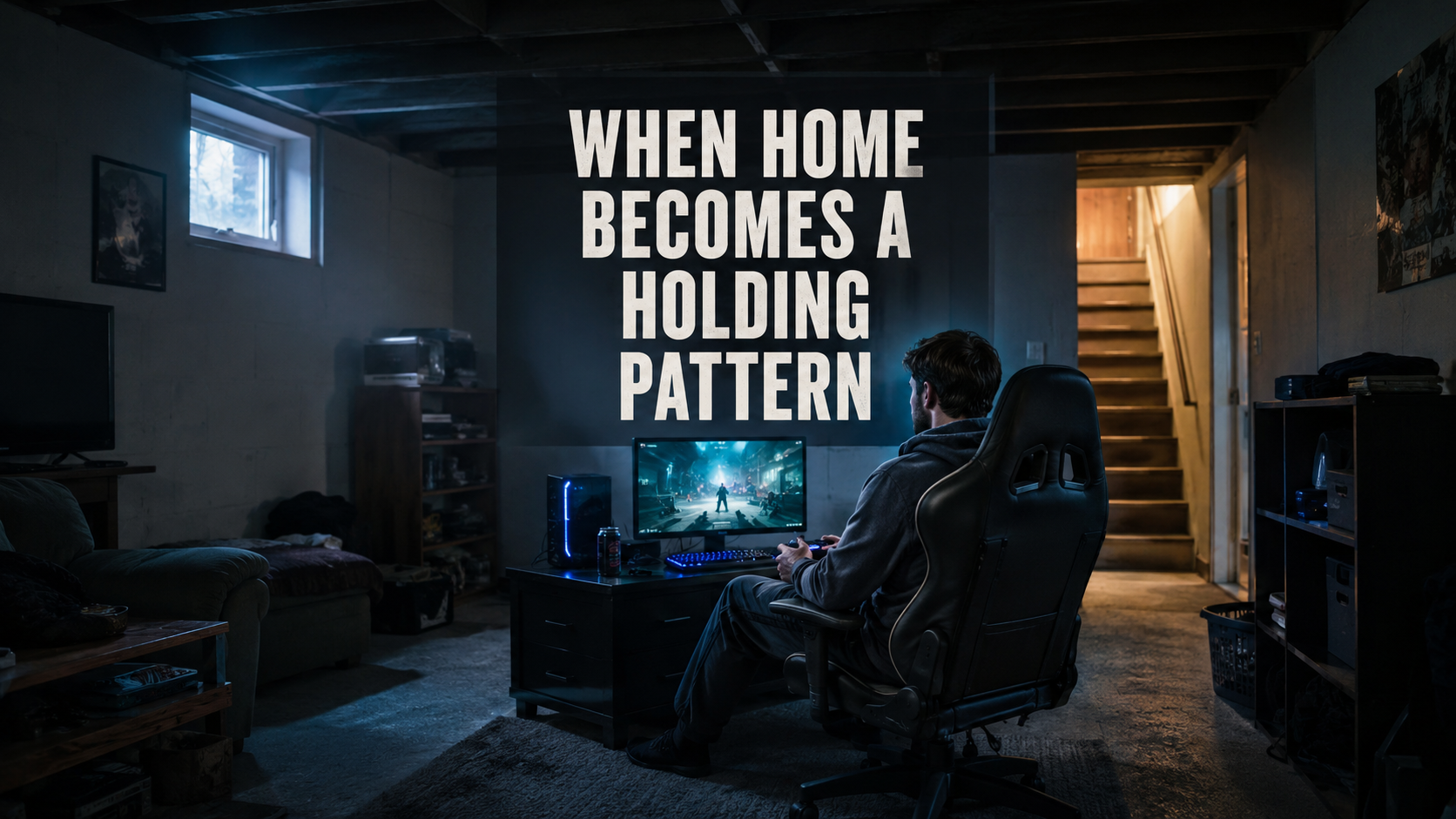
Living with family can be a practical choice. The harder question is whether everyone has a way forward. A grounded look at shared expectations, contribution, and the conversations that help adult children and parents plan the next step.
How families can turn support into a workable plan for contribution, capability, and greater independence.
There is a bedroom at the end of the hall that was supposed to be empty by now. Life had other plans.
Maybe the person in it is working and saving. Maybe they came home after a job loss, an illness, or the end of a relationship. Maybe the family has chosen to share a home for the long run.
Or perhaps everyone is frustrated because the arrangement has no clear expectations and no direction. The bills keep arriving. The household work keeps falling to the same person. Conversations about what happens next end with “soon.”
That is the situation worth examining. The useful question is what this arrangement is helping everyone build.
Start with the circumstances, not the stereotype
Housing costs are a real obstacle. Harvard's Joint Center for Housing Studies found that 49% of U.S. renter households spent more than 30% of their income on housing in 2024. Read its analysis of housing affordability.
Living with parents is also an established part of the picture. The Census Bureau reported that, in 2022, 19% of men and 12% of women ages 25–34 lived in a parent's home. Those are figures for 2022, reported in its May 2024 article. Read the Census account of living arrangements.
And support often runs in both directions. In Pew Research Center's 2024 report, 72% of adults ages 18–34 who lived with a parent said they contributed toward household expenses, rent, or the mortgage. Read Pew's findings on financial help and independence.
An address tells us very little about a person's effort. A household conversation can tell us much more: What is each person contributing? What is difficult right now? What would progress look like?
Buying a house is not the entry exam for adulthood
A first independent home might be a rented room or an apartment shared with friends. It may involve used furniture and a careful budget. For another family, continuing to share a home may be the most sensible choice.
Responsibility can grow in any of those settings. Managing appointments, understanding bills, doing household work, learning a skill, earning income where possible, and caring for a relative all count.
The important distinction is between needing help and handing over every manageable responsibility. If a parent is doing something the adult child could learn to handle, that is a place to begin.
Ask, “What can you take ownership of this month?” Then make enough room for the person to do it.
Talk about the work that is getting missed
Gaming often becomes the visible target in these arguments. The screen is on while the chores are undone, so the screen becomes the explanation for everything.
Start with what you can observe. Was an agreed task completed? Was an appointment missed? Did somebody spend money that was needed for a shared bill? Those questions give a family something concrete to discuss without pretending to know what is happening inside another person's head.
A hobby can be part of a full, responsible life. It becomes a household concern when it repeatedly displaces agreed responsibilities, whether the activity is gaming, scrolling, or something else.
Gaming disorder is a separate clinical question. The World Health Organization describes impaired control, gaming taking priority over other activities, and continuing despite negative consequences. Diagnosis requires significant impairment and ordinarily a pattern evident for at least 12 months. A family dispute about chores does not establish that diagnosis. Read WHO's explanation of gaming disorder.
When someone is struggling to function, seek appropriate professional support as well as discussing household expectations. A label shouted across the kitchen will not tell you what help is needed.
Treat a proposed career like a proposed career
If an adult child wants to build a gaming, streaming, or creative career, take the proposal seriously enough to ask practical questions.
What work are they producing? What skills are they developing? Is there an audience, a customer, or a paying opportunity? What has the effort earned after expenses? How long can the household afford to support the experiment?
An early venture may not earn enough to live on. That makes a budget, milestones, and a review date especially useful. Enthusiasm deserves a chance to become a plan.
The same questions belong beside a parent's business idea. Standards are easier to respect when they apply across generations.
Put the arrangement on paper
Choose a calm time to talk. Begin with the actual household costs and workload, then work toward an agreement everyone understands.
A useful agreement can cover:
Money: a contribution that reflects income, essential expenses, and ability.
Household work: specific recurring tasks, with a clear owner and timing.
Work or learning: practical next steps toward employment, training, education, or another agreed goal.
Personal administration: who handles appointments, transport, applications, and bills, with support where needed.
Privacy and shared space: quiet hours, guests, and respect for each adult's belongings and decisions.
A review date: when everyone will discuss what is working and what needs changing.
Be concrete. “Help more” is difficult to measure. “Handle dinner and cleanup on Tuesday and Thursday” gives both people something they can recognize.
An agreement should also acknowledge unpaid care and disability-related needs. Fair contribution is about the household's real circumstances, not identical dollar amounts or tasks.
Parents have a part in this, too
It is worth looking at what happens after the agreement. Does the parent take over before the adult child has a chance to try? Are expectations stated clearly, or revealed through frustration? Are decisions genuinely handed over, or repeatedly reversed?
Those are behaviors a family can change. We do not have to assign motives such as selfishness or fear of being alone to address them.
Support might mean demonstrating how to compare a bill, then letting the other person handle the next one. It might mean helping prepare for an appointment while leaving the adult to make the call. It can include admitting that a previous arrangement no longer works for the parent.
Respect goes both ways. An adult receiving help should take agreed responsibilities seriously. A parent offering help should respect adult autonomy and be honest about what they can sustain.
Plan for a change in support
Ask what would happen if your household’s usual arrangements changed. A parent could become ill, income could fall, or a caregiver could need a break.
Who knows which bills are due? Who understands the household budget? What skills or support would each person need? Where ongoing care is necessary, what backup arrangements should be explored?
Preparing for change can be an act of care. The aim is to make fewer essential things depend on one person always being available.
Give the next month a purpose
Begin with one conversation and a short, realistic agreement. Pick two or three responsibilities, identify any help needed to carry them out, and set a date to review progress.
If the plan stalls, examine why. An unclear task, a missing skill, a health concern, and repeated disregard for an agreement call for different responses. Stay specific enough to tell them apart.
Living together can be a bridge, a long-term choice, or part of a care arrangement. What matters is whether the people in the home have a voice, share responsibility as they are able, and understand what they are working toward.
The goal is greater capability and a fairer household. That is progress you can begin building before anyone packs a box.
About this article
Cultural commentary with linked research and practical discussion prompts. Household examples are illustrative. Persistent difficulties with daily functioning warrant individualized professional support.
Related reading: The Last Version of Us and The Career Pivot After 50.
The Last Version of Us: When Families Become Strangers While Everyone Is Still Alive
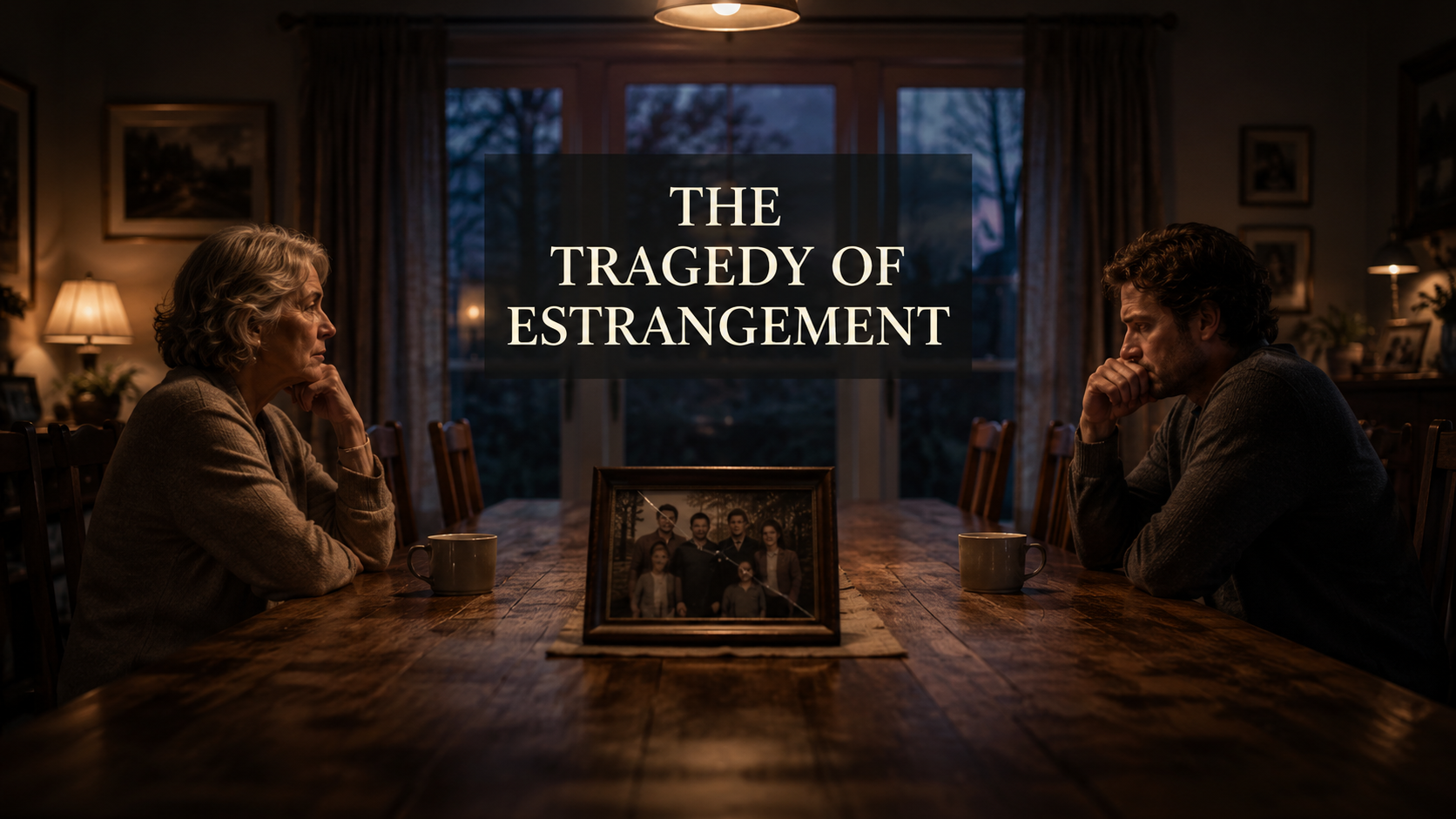
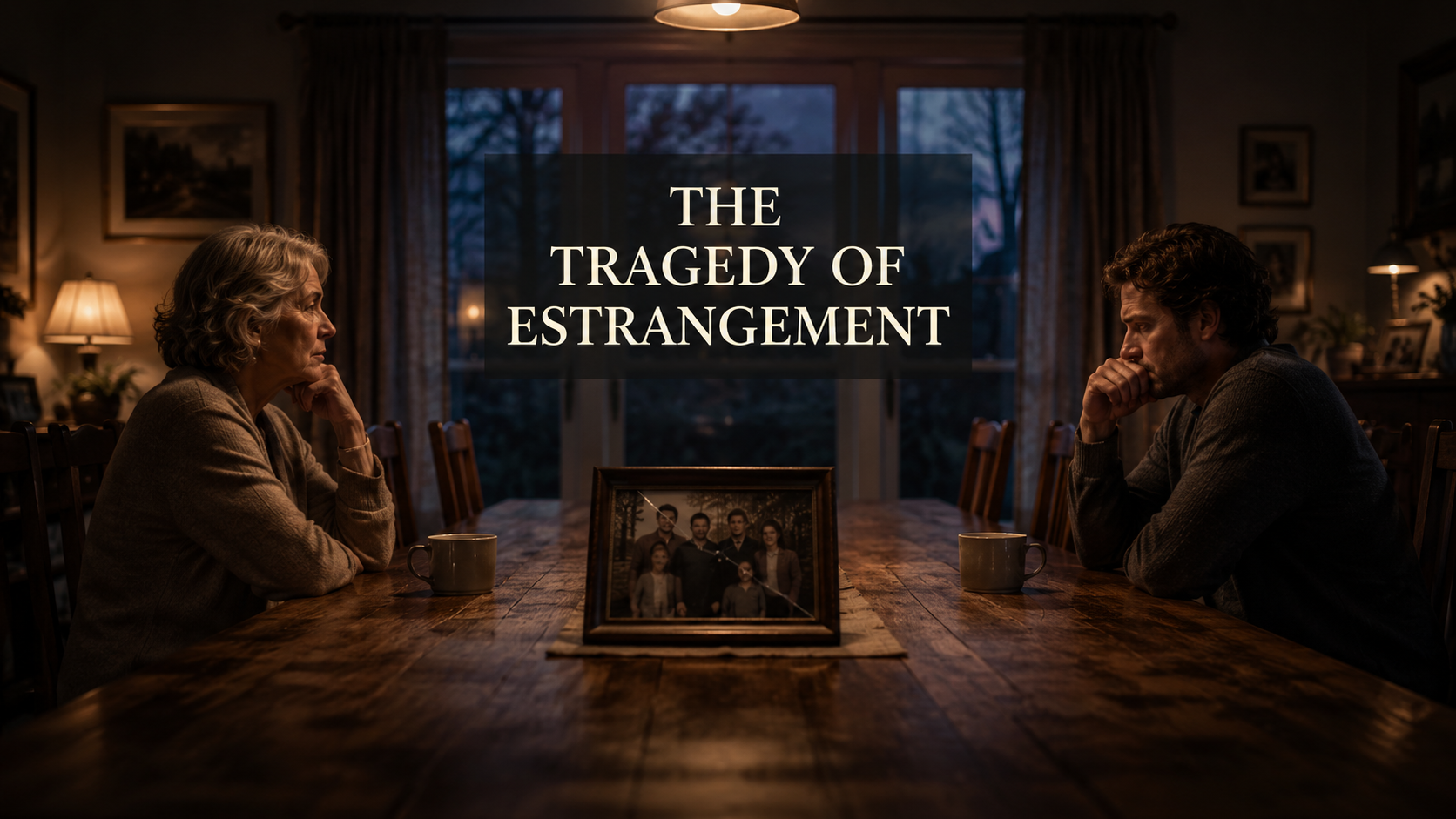
Family estrangement is a grief without a funeral. Parents, adult children, grandparents, and extended families often carry different versions of the same story. This article explores generational patterns, accountability, family systems, and whether people deserve to be remembered as more than the moment everything broke.
A reflection on family distance, accountability, and making room for change without surrendering safety.
The birthday still comes. The photograph is still in the drawer. The person is somewhere in the world, but the relationship you remember is no longer part of daily life.
Family estrangement can be difficult to explain because the loss does not arrive with a funeral or a clear ending. A parent may be mourning silence. An adult child may be protecting a boundary. A grandparent may be wondering what the next generation will know of the family story.
Those experiences can exist at the same time. They do not establish that everyone caused equal harm or owes the same response.
The Cornell Family Estrangement and Reconciliation Project reports that 27% of Americans in its research were estranged from a close relative, including parents, children, siblings, and other relatives. Read the project's explanation and findings.
If this is part of your life, you are not the only person trying to find language for it.
The photograph where time stopped
Sometimes we remember someone most vividly at the moment they hurt us: the argument, the betrayal, the words spoken, or the apology that never came.
Consider two possible questions. A parent might ask, “How did my worst moments erase everything I gave?” An adult child might ask, “How can you not understand what those moments did to me?”
Both deserve to be heard. But hearing a question is different from accepting its premise. A history of providing does not cancel harmful conduct. A person's pain does not make every conclusion about another person's motives certain.
The harder conversation asks what happened, what its effects were, and what has changed since. It leaves room for complexity without using complexity to dodge accountability.
The tools we inherited
In some families, love was expressed by showing up, working overtime, and keeping food in the refrigerator. Talking about hurt was less familiar. A person could learn how to provide without learning how to apologize.
That history may help explain a limitation. It does not erase its consequences.
The CDC describes how adverse childhood experiences can affect health and relationships, with effects that can reach the next generation. It also emphasizes the protective role of safe, stable, nurturing relationships. Read the CDC's overview of childhood adversity.
We can recognize what a parent did not receive and still ask that parent to take responsibility for what they did. We can understand an adult child's need for distance without pretending we know every detail of the relationship.
Care, advice, and control
When children become adults, the relationship has to make room for adult choices. Advice is no longer an instruction simply because it comes from a parent.
Concern may be loving. It can also become pressure when it is repeated after a clear answer. A difficult conversation may be worth having, but cruelty and coercion do not become care because someone calls them honesty.
For someone choosing to reflect on their own conduct, useful questions might be:
Was I trying to understand, or trying to secure agreement?
Have I listened to the boundary already stated?
What specific action can I acknowledge without immediately defending it?
What would changed behavior look like over time?
Start with the question you can answer most honestly.
The family around the fracture
Siblings, grandparents, friends, and partners can find themselves pulled into the dispute. Support becomes complicated when people are asked to carry messages, repeat allegations, or persuade someone to resume contact.
My view is that support should begin with listening and respect for the person's choices. Ask what they need rather than assuming the answer is a reunion.
“Would you like me to listen, help you think through an option, or give you some space?” is often a more useful place to start than “But they're your family.”
Children should not have to serve as messengers or judges in an adult conflict. Family history can be explained with care without recruiting the next generation to prove a point.
Change is possible. It is not owed.
A U.S. longitudinal study found that many respondents classified as estranged from a parent moved out of that category in later survey waves. The finding describes changes in contact and closeness; it cannot establish that a particular relationship became safe or fully repaired. Read the study's abstract and methods summary.
That distinction matters. Contact is not the same as trust. A holiday invitation is not evidence of accountability. Time passing is not a substitute for different behavior.
For people who both want to consider repair, the questions become practical: What contact is welcome? What topics or behaviors are off limits? What happens if a boundary is crossed? Is there enough evidence of change to take even a small step?
No one owes renewed access because another person has decided the time is right. A person can change and still have to respect someone else's decision to remain apart.
When the goal is peace
Reconciliation is not the only possible outcome. Some people want limited contact. Others need distance. Some are still deciding. A qualified professional familiar with estrangement and, where relevant, abuse can help someone examine their own circumstances without a predetermined demand to reunite.
If contact involves threats, coercion, stalking, or abuse, this essay should not be read as encouragement to initiate it. Safety takes priority over a satisfying family ending.
There can be grief even when a boundary is necessary. Missing someone does not automatically mean the boundary was wrong.
The last version of us
I want to leave room for a person to be more than their worst chapter. I also want to leave room for the person hurt by that chapter to decide what happens next.
Perhaps two questions belong together: “What happened between us?” and “Who are we now?” Neither cancels the other.
Sometimes the answers make a new relationship possible. Sometimes they make the need for distance clearer. Either way, dignity requires honesty about the past and consent about the future.
Author's note
This essay combines reflection with linked research. It does not diagnose a family, assign equal blame, or prescribe reconciliation. The questions are illustrative and are not a substitute for individualized mental-health or legal support.
Related reading: When Home Becomes a Holding Pattern.